What’s the difference between a kitchen towel, tea towel and dishcloth?
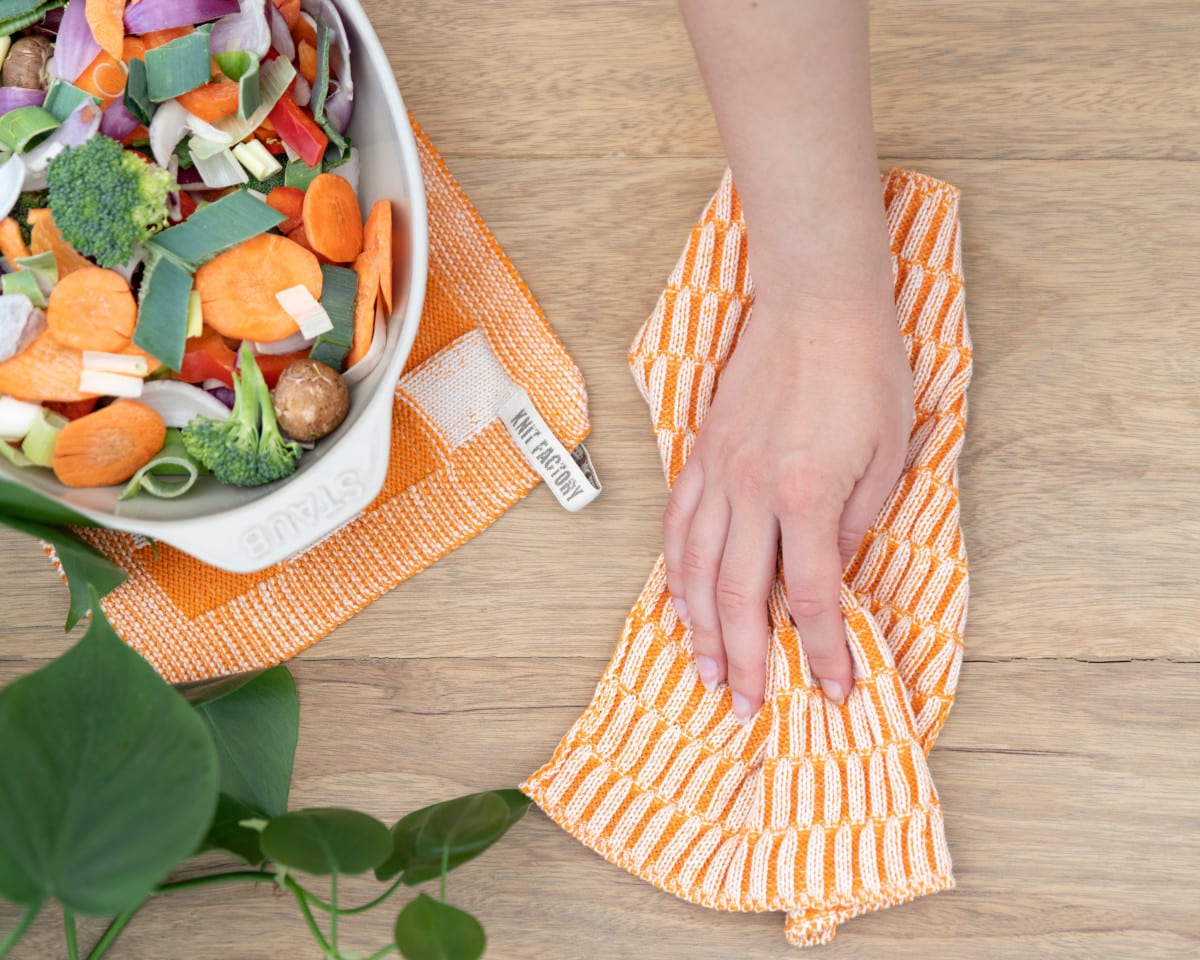
Kitchen towel, tea towel, dishcloth… They’re all essentials in the kitchen, yet the terms are often used interchangeably. That’s understandable, as they may seem very similar at first glance. However, each cloth is actually designed for a specific purpose.
A kitchen towel, tea towel and dishcloth all play a different role in the kitchen. By using each one for its intended purpose, you can work more hygienically, improve efficiency and help your textiles last longer.
In this article, we’ll explain the difference between a kitchen towel, tea towel and dishcloth, and why all three deserve a place in your kitchen.
Why are there different types of kitchen cloths?
The kitchen is one of the busiest areas of the home. Every day, cloths are exposed to moisture, food residues, cleaning products and frequent washing.
While using a single cloth for everything may seem practical, it’s often less hygienic and less effective.
That’s why different cloths exist for different tasks:
- A dishcloth for cleaning surfaces.
- A kitchen towel for drying hands.
- A tea towel for drying dishes and glassware.
Keeping these tasks separate helps maintain better kitchen hygiene and improves the performance of each cloth.
What is a dishcloth?
A dishcloth is primarily used for cleaning tasks around the kitchen.
For example:
- Wiping down countertops.
- Cleaning tables and worktops.
- Absorbing spills.
- Cleaning kitchen appliances.
Because dishcloths regularly come into contact with dirt, food particles and bacteria, they should be changed frequently and washed regularly.
A quality dishcloth absorbs moisture effectively, feels comfortable to use and maintains its shape after repeated washing.
When should you use a dishcloth?
Use a dishcloth whenever you’re cleaning kitchen surfaces. Avoid using it to dry your hands or clean dishes, as this can spread bacteria and reduce kitchen hygiene.
What is a kitchen towel?
A kitchen towel is designed specifically for drying your hands while cooking or washing up.
During meal preparation, you often wash your hands several times. A dedicated kitchen towel allows you to dry them hygienically and conveniently.
Kitchen towels are commonly used for:
- Drying clean hands.
- Quickly removing moisture from clean surfaces.
- General kitchen tasks that require absorbency.
A good kitchen towel is highly absorbent and durable enough to withstand daily use and frequent washing.
Why is a separate kitchen towel important?
Using the same cloth for your hands, surfaces and dishes can easily spread bacteria around the kitchen. A dedicated kitchen towel helps maintain better hygiene and keeps tasks separate.
What is a tea towel?
A tea towel is specifically designed for drying dishes, cutlery, cookware and glassware.
Unlike a dishcloth, a tea towel should only come into contact with clean dishes. This helps keep dishes hygienic and prevents streaks or marks from appearing on glassware.
A quality tea towel:
- Absorbs moisture quickly.
- Leaves no lint behind.
- Dries dishes streak-free.
- Maintains its quality after repeated washing.
The difference is especially noticeable when drying glasses and delicate tableware.
When should you use a tea towel?
Use a tea towel only for drying clean dishes, glasses and cutlery. This ensures the cloth remains effective and hygienic.

Why do you need all three?
Some households use one cloth for multiple purposes. While this may seem convenient, there are several advantages to using separate cloths.
Better hygiene
Separating cleaning, hand drying and dish drying helps reduce the risk of cross-contamination.
Improved performance
Each cloth is designed for a specific task, allowing it to perform better than a multipurpose cloth.
Longer lifespan
When used correctly, cloths experience less wear and tear and retain their quality for longer.
More comfort
A good tea towel dries dishes more effectively, a quality dishcloth cleans surfaces more efficiently and a highly absorbent kitchen towel dries hands quickly.
How many kitchen towels, tea towels and dishcloths do you need?
The answer depends on the size of your household and how often you do laundry.
As a general guideline:
- 3 to 5 kitchen towels
- 3 to 5 tea towels
- 4 to 6 dishcloths
This ensures you always have clean cloths available while others are in the wash.
Larger households or enthusiastic home cooks may prefer to keep additional cloths on hand.
What should you look for when choosing quality kitchen textiles?
Not all kitchen textiles are created equal. Quality makes a significant difference in daily use.
Consider the following factors:
- Absorbency
- Material quality
- Shape retention
- Colour fastness
- Finishing and durability
- Washability
High-quality materials help ensure that your kitchen textiles remain functional and attractive for years.
Knitted kitchen textiles: stylish and practical
Kitchen textiles are no longer purely functional. Many people also want them to complement the style of their kitchen.
Knitted kitchen textiles combine practicality with a warm and inviting appearance. Their unique texture creates a distinctive look while remaining highly functional for everyday use.
Coordinating kitchen towels, tea towels and dishcloths in matching colours can help create a calm and cohesive kitchen interior.
Which cloth should you use?
In summary:
| Cloth | Purpose |
|---|---|
| Dishcloth | Cleaning countertops, tables and kitchen surfaces |
| Kitchen towel | Drying hands while cooking |
| Tea towel | Drying dishes, glasses and cutlery |
By using each cloth for its intended purpose, you can work more hygienically, efficiently and comfortably.
Experience the difference every day
A well-organised kitchen starts with practical, high-quality essentials.
By choosing separate dishcloths, kitchen towels and tea towels, you’ll improve hygiene, simplify everyday tasks and create a more enjoyable cooking environment.
Quality kitchen textiles absorb moisture more effectively, remain beautiful after repeated washing and make everyday kitchen tasks just that little bit easier.
That’s why kitchen towels, tea towels and dishcloths continue to form the foundation of every well-equipped kitchen.


